Kim Sung-yoon on going beyond heroes and villains in Fragment
by Casper Borges
Fragment Photo: Fantasia International Film Festival
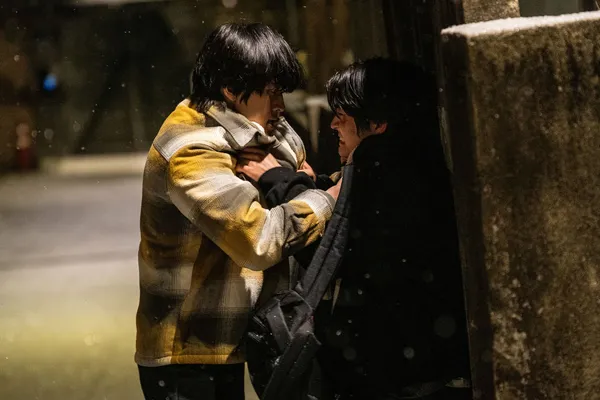
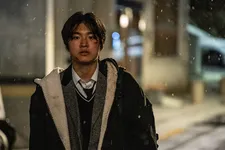
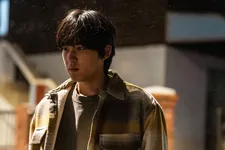
South Korean director Kim Sung-yoon's directorial feature début Fragment revolves around two middle schoolers whose lives are tragically intertwined. Jun-gang (Oh Ja-hun) is forced to look after his younger sister. Trying to find a part-time job to avoid eviction, he encounters the tormented and angry Gi-su (Moon Seong-hyun), whose father was murdered by Jun-gang's father.
A powerful début that explores the complicated connections we share with others, Sung-yoon explores childhood trauma with a maturity rarely seen in cinema. He shows each of his characters sympathy and tries to understand them on a human level. Fragment is never driven by the need to respond and this singles it out as a political film in an increasingly divided world.
In conversation with Eye For Film, Sung-yoon discussed blurring traditional narrative lines, Ken Loach's pearl of wisdom and Fragment's journey of discovery.
Fragment Photo: Fantasia International Film Festival
Casper Borges: The limited opportunities to direct means it's difficult to hone your craft because, after all, you can only learn by doing. What have you taken from the experiences of working on other people's films, and how do you navigate the uncertainty that underpins a career in filmmaking?
Kim Sung-yoon: Working in other people's films, I feel I've learned a lot about the practical approach to filmmaking. In terms of the lack of opportunities to get into directing, I believe that putting in the effort will lead to opportunities presenting themselves. And while you're waiting, you have to use that time — I'll work on ideas so that they're ready when that opportunity arises.
I'm actually going to be shooting my next film, which I've written, in Korea in August. During Covid, I had a lot of time to write, and in that period, I wrote around eight screenplays. I'm continuing to develop and edit those as well, but through the process of writing, I've learned a lot about myself — what kind of people and stories I like and even about my own identity. So, writing is a good learning experience.
CB: How did you land on the decision for Fragment to be your feature début?
KSY; Of all my screenplays, Fragment was one of the last ones I wrote.
Working as a first assistant director on other people's films, I always noticed that the focus was usually on the central incident. I instead wanted to talk about those fragments of an incident that are left behind and how that affects those involved. So, I really wanted to portray the lives of the people who were affected by an incident in its aftermath.
CB: Fragment doesn't seek to identify characters along the traditional protagonist and antagonist lines. Instead, all the characters are protagonists the audience can sympathise with.
KSY: I didn't want to include someone that would be considered a clearly defined villain. My reasoning was that everyone is acting the way they are because of the situation rather than ill intent. This was something I gave a lot of thought to, including the protagonists and the supporting characters. The focus was on all the characters just being normal people, and like I said in the Q&A after the film's screening, they are just children.
Fragment Photo: Fantasia International Film Festival
CB: These children are innocent and, yet they're surrounded by darkness. Could we describe Fragment as being a film about innocence, and on this subject, the use of the piano in the film's soundtrack appears to express an innocence in its sound?
KSY: A lot of questions arose from the film's ending and a lot of audiences responded to that. Again, I wanted to showcase how normal people can be changed by situations. It's not necessarily about their intentions or inherently who they are. I wanted audiences to consider that these children, in these types of situations, exist somewhere. And I'm a fan of Ken Loach. I was inspired by a quote from his movie The Old Oak: "When you eat together, you stick together."
The three protagonists each have a single note assigned to them in the music, and as the plot progresses and escalates, those three notes come together to create a harmony, and even become a kind of lullaby.
CB: Thinking about your approach to music and your thoughtfulness towards the characters, is filmmaking a journey of discovery?
KSY: Filmmaking is a journey of discovery, and especially with this film. The ending I had initially planned was a little bit different from the ending that I arrived at in the final cut. There was a lot more warmth and compassion in the ending that came later, and so, yes, it's definitely a journey of discovery.

 Facebook
 Reddit