





























News and features

59th New York Film Festival early bird highlights Futura, Jane By Charlotte, James Baldwin: From Another Place and The Velvet Underground

2021
As a whole, it appears way too kinetically ostentatious for its own sake, sadly making it less than the sum of its parts, but there are things to appreciate here.
There’s sadness here for isolation and a grief that goes beyond the loss of a single life once lived. There’s also a heightened sense of the smaller absurdities of existence.
Strahinja’s whole journey leaves the feeling of participating in a sort of pilgrimage with him, via a vérité shooting style that works all the steady-cam shakes in its favour, adding to the film's authenticity.
The way June 1941 is presented here, the looming warfare seems to happen in the present
At times, the dialogue is well done, scores points. At other times, it felt like we had wandered into a Socratic symposium.
There's an elegance to the filmmaking as this story unravels its themes of societal prejudice, justice and remorse that elevates every frame.
The interplay of the spiritual and the sensual is vital here.
Binoche gives her all, stripping away any vestiges of actressy pretence to assimilate herself in the community while at the same time investing her performance with an authentic conviction.
There’s a dryness to this comedic drama which occasionally makes it drag, but Omerzu breaks with it to great effect in places, when he’s ready to present contrasting scenes of highly emotive, character-driven drama.
Given the state of the things, it's fair to say that some of the situations that will arise are telegraphed ahead of time, but that adds rather than detracts from the tension - after all, aren't all satisfying meals in some ways connected to anticipation?
After the fantastic opening scene, snapshots of their life in Georgia set the tone.
The director shows the warmth of the children against the cool aloofness of teachers who feel little connection to their wards, even as we know even Yusuf's herculean efforts are likely to prove ineffectual.
You might notice the elegance of composition while knowing that the place contains so much human suffering.
Full of unspoken pain and resentment, the treasured Chiara carries her father’s sins in his absence as she struggles to decide which course to follow in her own life.
The everyday feel is acute – you can virtually smell the pickle jar vinegar and raw spirit and imagine a slight stickiness on the seats as Jani-Petteri Passi’s camera captures the scene with a looseness that rocks along with the rhythm of the train.
This is how the film plays out: loose and jumbled but still somehow telling a story. It's a style that suits its subject perfectly.
Slow to build and with an assembly of characters who are all more complex than they seem on the surface, Drive My Car exemplifies Japan’s growing body of literary cinema.
With jump cuts, fancy fades, and towels featuring cartoon owls and penguins, Amalia Ulman draws from her work as an artist and includes it seamlessly into the world of cinema.
There's an odd dynamic to this animation in that the visually stunning imagery seems to have come from an entirely more rich imagination than the rather perfunctory and, at times, borderline annoying storytelling which accompanies it.
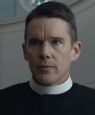
First Reformed ends up being a satisfying meditative echo rather than a simple replay of Schrader greats.
By animating the whole movie, Rasmussen makes the story feel more immersive and of a whole piece.
Shot with a fluid intimacy by cinematographer Baris Özbiçer, Oyay's film gathers momentum and an increasingly punk energy as it goes.
More interested in illustration than in analysis.
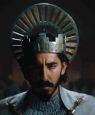
Any number of the film’s frames belong in frames, fit to adorn palace walls.
Panahi and his actors shift through emotions so smoothly, you barely notice them until they have immersed you.
Writer/director Basholli directs with a deceptively simple handheld aesthetic, emphasising the bleak reality of the setting.
Taps into deep, Jungian terrors and turns confusion into an asset.
Jóhann Jóhannsson has created something that successfully captures the spirit of the book whilst feeling like a memorial to humanity.
There are scores of interviewed figures, all sorts of tall tales, but the line between biography and hagiography can be a slim one.
Too much and over the top, the film nevertheless finds its rhythm.
This is a clear-eyed view of the choices Jesmark and those like him are facing, showing just how complex the situation is, cutting beyond work to community and culture.
For all the talk of hermetical storytelling, this might be his least hermetic and most approachable movie to date.
The memories have the vibrant immediacy of teenage energy and are treated by Hadjithomas and her co-director Khalil Joreige in the same spirited fashion.
It’s aided by Ryuichi Sakamoto’s highly evocative score, which locates it in time and space as well as providing a dramatic undercurrent to the action.
It’s shock comedy with no sense of impact or context, because before you can let the shock set in, the movie is running full steam ahead toward another disgusting episode.
Lynch creates unease with every camera angle and glitch in the storyline.
The screenplay and direction deftly let the audience put together the pieces, making the discrepancies plain to see without hitting us over the head with their existence.
The first-time director shows an adept grip when it comes to the rhythms of her craft, letting silence or specific sounds break out at unexpected moments, including a gripping scene when all we can hear is the spring and creak of the uneven bars.
Harari and his co-writers Bernard Cendron and Vincent Poymiro, show how the war propaganda becomes internalised in these men, so that even when they are given signs that the conflict may be over, they rationalise that it must be some sort of 'fake news' designed to trick them.
Bliadze observes the proceedings with a cool and non-judgemental detachment and an eye for the absurd.
Smutný gives us faces that will stories even when they're still, the weight of long experience etched into every line.
Audiard captures the fluid nature of relationships for a younger generation navigating both on and offline opportunities and, because this is French, it also features plenty of gracefully worked sexual encounters.
The autumn setting fits it perfectly, because although this is the change of the year as things die back for winter, it is also blazing with colour and hopefulness.
Everything has been meticulously researched from the garish costumes and outlandish make-up to the mechanics of the business.
By delving into fiction, Huezo is able to focus on the impact of this crisis on individual human lives.
Zbanic's measured approach ensures that we can't look away from the unfolding horror - something that she makes clear many at the time, both peacekeepers and non-Muslim residents, found all too easy to do.
Some may be dissuaded by the painstaking pace yet the tone manages to be both humorous and heart-rending at the same time.
Wright doesn't try to reinvent the documentary form, but draws on the Maels' energy, matching their playfulness and incorporating both stop-motion and a decoupage styles of animation into their back story.
Gornostai avoids obvious narrative arcs in favour of just letting us hang out and observe the everyday challenges and small dramas that pepper the lives of these 16-year-olds.
The film wears its story lightly. Even when Simón is dealing with heavier themes her focus is on Frida and her emotions.
High intensity workouts are matched by a high intensity acting performance by Magalena Kolesnik, who powers her way through this character study.
The use of traditional folk song and the fact that the language shifts from Italian to Spanish also highlights the way that stories are passed from mouth to ear down the generations and across borders.
Right from the outset, this film zeroes in on Tina's natural charisma.
While the addition of more bad guys offers additional scope for action sequences, the characters aren’t given enough time for development.
The most restrained and yet audacious, unadorned and still intelligent picture the Argentinian auteur has made.
Digression builds upon detour, which piles charmingly onto excursion, sometimes lifted, sometimes pushed and always shaped by a score that also roams freely in its influences.
The Japanese filmmaker guides his actors as if they were just learning emotions, creating an impression of awkwardness.
There is a lingering, half blossomed melancholy that lies underneath the often very funny, fast-paced moments of quotidian chaos.
The barest hooks of a narrative are here but stitched together with a lot of energy and stylish flourishes from cinematographer Benjamin Rufi.
59th New York Film Festival early bird highlights Futura, Jane By Charlotte, James Baldwin: From Another Place and The Velvet Underground

Eye For Film continues to support festivals both locally and across the world. At the moment, we're covering:
Tallinn Black Nights Film Festival
Festival showcasing international and Baltic films
Thessaloniki International Film Festival
French Film Festival
The UK's longest running celebration of Francophone cinema

Search Movie Database
Search Eye For Film with Google