




















































News and features

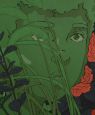
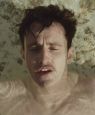
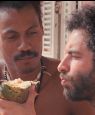
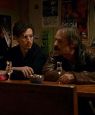
59th New York Film Festival early bird highlights Futura, Jane By Charlotte, James Baldwin: From Another Place and The Velvet Underground

2025
Drucker, who earlier thrived as a character or supporting actress, once again demonstrates that she has the authority for lead parts.
Alpha exists in the intersection of the probable and the parable.
This film is - sorry, but it has to be said - the dog's bollocks.
It’s the sort of sweet-natured fable that makes adults nostalgic for childhood, but both the near and far futures it presents are, to children themselves, already likely to seem out of date.
Kubrick badly misses the mark with this film, not in quality, but by a whole decade. It simply does not fit into the 1970s.
The amount of material is impressive.
It’s Drucker’s mesmerising performance that papers over the cracks.
While tolerance levels for this kind of self-consciously arty style will vary, it is hard to fault the fizzing ambition and high-voltage energy that K-Stew and her team bring to the party.
There’s a fairy-tale element to this – and once the famous names start to be introduced, including Sarah Bernhardt, it becomes obvious it’s no history lesson – but that suits the crowdpleasing material well.
The creepy big brother aspect of the film pervades everything.
Animator Momoko Seto primarily deserves praise for imbuing each seed with a distinctive personality so that although the film is without dialogue we always know which of our adventurers we’re observing.
There’s something here that’s distinctive and personal and altogether too much fun.
Laperrière's focus is on creating a sensorial experience, allowing the narrative to become somewhat murky.
Ramsay's style takes no prisoners.
Why should a story about two angels who have been hanging around Wisconsin for aeons, bored rigid, and wanting to go home, be understandable?
The truly admirable aspect of Eddington is the way Aster constantly pulls the rug from under expectations.
Yet Pohu’s performance sums up all the conflicted feelings, desires and anxieties of someone at the crossroads of entering adulthood.
A handsome piece of cinematic work,
An absorbing account.
Kowalski's story of black magic and isolation takes command of its audience through a ghastly soundscape.
Most of the filmmaker’s passion, wisdom and wits is packed in the first half, while the second half represents pure “production” of content.
Too much of the social grammar remains out of reach unless viewers are willing to research afterwards, and a drama this grounded in real structures shouldn’t require homework to fully land.
The takes are usually long and static, but every cut and move is justified for the purpose of dramaturgy.
It's so lost in post-colonial anger that it falls foul of being disingenuous or a trap for European audiences.
This is a consistently interesting film and a good exercise in navigating historical narratives, even if it’s not exactly what its UK title might have viewers expecting.
So much is happening at once in Kika’s life that the viewer has a hard time grasping the supposedly long lasting emotional challenges she is facing.
The performances are thrilling, emotionally direct and physically exacting, but they function as narrative instruments too.
Blends a shaggy dog story with a road trip.
The narrative bowls along from one set piece-chanson to another.
The title stops being metaphor and becomes a wound you can watch forming in real time.
Amélie doesn’t just narrate but completely dominates this film as a personality.
On the technical level, Jacques Girault’s usually hand-held cinematography keeps the immediacy of associated with that choice, but never slips into “chaos cinema” shakiness.
Krieps operates at her usual level of greatness, and Anna Cazenave Cambet does her a favour by putting her in the spotlight.
The screenplay is packed with absorbing detail.
Sinai portrays the situations one might find quite common and “close to home” with precision and emotional clarity.
Reichardt’s attention to detail is visible in every aspect, and the perfect casting is no exception.
Adopting a style that blends collage and observational filmmaking, they probe how human minds and bodies contort, struggle and resist against a cruel war and its repercussions.
As is true of many a tale, not all motivations are on the table right away, and finding rescue and respite with strangers can only last a mere while.
It’s certainly all very timely and apposite
Nino offers a glimpse into an ordinary, possibly unfulfilled life and the psyche of a contemporary man trying to reconfigure things in the wake of a challenge.
Guillaume Marbeck as Godard is pitch perfect, trademark dark glasses and tobacco smoke his indispensable props with even the voice uncannily resonant of the man himself.
Offers food for thought in the realm of a slightly ungainly and sprawling all-you-can-eat buffet rather than a satisfying sit-down feast.
All of this fine work has potential, but too often the deeper ideas in the book are teased only to be abandoned.
Émond’s mastery can be best observed in her perfect comedic timing and the use of sex as a tool both for comedy and emotional impact.
The real challenge is to keep up with the pace as well as the information overload.
The constant contrast is the trick, which later extends to the emotional stakes.
Borrowing tropes from horror, the film adds an uncanny undercurrent to its drama.
Nayyef and Qasem are marvellous, completely natural and without a hint of self-consciousness.
Writer/director Sven Bresser lets events unfold slowly and makes great use of silence.
Combining slick digital look with the look of various antique formats, from DV to super-8, Simón creates her very own smooth blend.
Marcelo is at home in the fine tradition of flicks where the fact that they are an agent is mainly a secret to them.
What marks Trier out is his ability to take on intellectual ideas like this but make them play out in ways that don’t feel forced or overly constructed.
The film looks amazing, but it sounds even more incredible.
The “star player” is the director of photography Rui Poças
Writer/director/star Eva Victor has created a poem about the pain and absurdity of entering and continuing adulthood, even when things feel heavy and hopeless.
The lives mirror each other, build on each other, contradict each other, haunt each other.
It’s hard to care about a film when those involved don’t appear to have done so themselves.
Szabo's saga is a reminder of how great European cinema used to be.
Chillingly restrained and quietly devastating
Not only ambitious – a term often used to damn films with faint praise – but successfully so.
The Belgian filmmaker quickly proves to be a director who is quite nimble with a feint in his own terms, so that when his punches come they often hit in unexpected places.
What appears banal in its depiction of a dysfunctional family is a joy to the watch.
59th New York Film Festival early bird highlights Futura, Jane By Charlotte, James Baldwin: From Another Place and The Velvet Underground

Eye For Film continues to support festivals both locally and across the world. At the moment, we're covering:
Tallinn Black Nights Film Festival
Festival showcasing international and Baltic films
Thessaloniki International Film Festival
French Film Festival
The UK's longest running celebration of Francophone cinema

Search Movie Database
Search Eye For Film with Google