







































News and features

59th New York Film Festival early bird highlights Futura, Jane By Charlotte, James Baldwin: From Another Place and The Velvet Underground

2017
Campillo has a weakness in not knowing when to trim all the talking.
Scenes don't run fully to their end or don't quite start at the beginning, the drama often whisked somewhere else as we're about to reach what more mainstream films would consider the small moments of climax.
The brittle, feigned civility prompts dialogue the equal of any Pinter ever wrote.
While the odds are, no doubt, stacked against her, Berneri gives Alanis a real sense of agency.
An astonishing debut.
Why make a movie about this match? Why now? Is it the danger factor with Superbrat or nostalgia for IceBorg or the ingenuity of the stunt guys to make the players look genuine?
With indelible images born from an unflinching gaze, Clément Cogitore's Braguino lets us feel enraptured in an impossible community - cradled by archaic myth and awed by a sublime nature.
Each of the characters here, presumably because they are rooted in truth, is given room to breathe and shows an ability to be changed by circumstance.
It is fundamentally a film about the workings of infatuation with a charmed fever that contaminates its characters.
As a metaphor for the way the world views changing relationships and mores the film is affecting.
There is nothing charming left in this all-is-lost and boys-will-be-boys scenario when violence perpetuates itself and decency is nowhere to be found.
So much is going on that Nakache and Toledano are able to slyly set-up jokes in such a way that we barely notice them, so that when they pay off their impact is greater.
Remarkably adept in balancing audience sympathies and bold in its refusal to choose the most easily justified routes for its characters, The Charmer is a powerful piece of cinema.
It is, presumably, his desire for realism that leads him to cross what will be a bridge too far for many audiences.
Even though the physical violence is kept to a minimum, Losey uses the sound of a riot to help feed the mounting oppression, mirroring the psychological turmoil within Bannion himself.
Though a short film, even one of half-an-hour as Legrand’s was, can be carried almost solely on this sort of tension, a feature needs something more.
Capturing this moment, this opening up, writer/director team Cecilia Atán and Valeria Pivato demonstrate that there's room on the big screen for small things.
Rather than simply turn Tommy into a laughing stock, Franco teases out the tragicomedy of the man.
Lelio makes no bones about how he wants us to feel, to the point where it sometimes feels as though he is stating the obvious is six-foot neon letters.
Whether she is probing at the ideas of the ties that bind us to a home or considering the morality of goat horns, she constantly nudges us to move around and, perhaps, get a better view.
The script doesn't patronise its characters, showing they're just as capable of the best of actions and the worst as anybody else, but makes sure we understand the additional pressures they face.
The story, built on the shifting relationship between the two brothers, holds considerable interest, even though the plot starts to ramble.
Both Losey and Pinter are less interested in the romance itself than in the way its illicit nature exposes the class divide.
Haneke is a master of his material, revealing just enough to keep the viewer on tenterhooks but not enough to give an easy explanations.
Mark Osborne's gently unfolding palimpsest of a film is a sweet tribute to generations of readers who have been enchanted by the prince.
The plot can sink without trace, which it does, because this is all about the stars
Zegers and Castro are no strangers to strange chemistry, most notably in Post Mortem, and they bring a dark psychological edge to their interactions.
Though the filmmaking is good, the bleakness of the message is unremitting.
Ozturk's cinematography would be stunning even without such remarkable subjects, and the film is a visual delight from start to finish.
Losey had shown how adept he was at claustrophobic interiors before, with the likes of The Servant, but here he also shows a flair for more abstract sweeping cinema.
When you're watching a film for the wallpaper you know you're in trouble.
In the realm of the insane reason has no place. Anything is possible. Even the impossible
It's as though Cuenta and his co-writer Alejandro Hernández spent so much of their energy on their impressive plot machinations that they have none left for developing his character, leaving Gutiérrez trying to work magic with just one note.
There is a fragility and brittleness to this but also an underlying warm sweetness that might just melt your heart.
Popescu's film isn't about loud recriminations but the way that lives can disintegrate by degrees.
Assur is adept at creating striking images - such as the shadows of the ravens of the title on a barn wall or the threat of violence posed by a piece of machinery.
A vivid illustration of just how close life can come to mockumentary when you start to scrutinise it.
While satirically entertaining in places it has too many threads competing for attention and ultimately runs out of steam.
Sergio G Sánchez has lofty ambitions, involving guilt, coming of age and a whisper of the supernatural - but without the emergency brake he is usually offered by whichever director he is working with to rein him in.
Bogarde, proving not for the first time that he was a whole lot more than just a pretty face, brings a real subtlety and edge to Barratt, letting just enough of the Machiavellian glint through to let us know there's more to this than first appears.
The film wears its story lightly. Even when Simón is dealing with heavier themes her focus is on Frida and her emotions.
The lightness of touch so evident in his family films is no less deft here, as he woos us with the promise of cast iron fact.... only to spend the rest of the film oiling the ground beneath our beliefs until they can't stop sliding this way and that
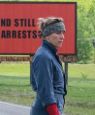
Fortunately, McDormand never lets Mildred's hold on us slip, balancing the conundrum of a woman who is simultaneously a mum, who likes a beer and a game of pool, and a Rambo-style avenging angel.
Palacio also understands the resonance of small objects for those who have nothing and uses this to heighten the impact of their situation on us.
All the actors here are non-professionals and Das elicits extraordinarily natural performances from them.
This creative and visually arresting adaptation of Brian Selznick’s critically acclaimed novel marks a filmmaker at the top of his game.
Björn Runge is in no hurry to reveal his characters' faults or their history, letting his camera linger on Close and Pryce, so we can see the thoughts that swim on after the words die away.
A chance to see the seas in a new way.
Nothing plays out as you expect, with Ramsay maintaining an unsettling staccato that keeps both the action and the viewer on edge.
59th New York Film Festival early bird highlights Futura, Jane By Charlotte, James Baldwin: From Another Place and The Velvet Underground

Eye For Film continues to support festivals both locally and across the world. At the moment, we're covering:
Tallinn Black Nights Film Festival
Festival showcasing international and Baltic films
Thessaloniki International Film Festival
French Film Festival
The UK's longest running celebration of Francophone cinema

Search Movie Database
Search Eye For Film with Google