

























News and features

59th New York Film Festival early bird highlights Futura, Jane By Charlotte, James Baldwin: From Another Place and The Velvet Underground

2022
There's a mood of eerie melancholy as Milk lays out the reasons why he might become a target for someone who is "insecure, terrified, afraid" - a concept that has lost none of its resonance with campaigners in many fields of equal rights in the years that have passed since.
The filmmakers are so wrapped up in the importance of the social issues, that they forget to come up with anything to say about them.
While all of the statistics - and Eiselt and Lee ensure they keep on coming - are brutal, the positive energy of activism is at the heart of this documentary.
Kogonada is the directorial equivalent of a careful tea maker himself, he knows how to infuse his films with complex ideas without getting preachy or overtechnical about it.
Sen could easily just have made an observational documentary about the brothers' day-to-day work or simply focused on the kites themselves but he stretches its wings much further than that.
Bradley has a feel for emotional moments, knowing when to push in close and when to step back.
Stephanie Allynne and Tig Notaro are impressively attuned to the humanity of their characters.
Emotions here are betrayed by the twitch of a knife, a violent dream, an envelope crumpled in a hand or a long toke on a cigarette.
This is a fluid film which, though impressionistic in terms of its narrative, carries a weight of emotion and the positive energy of childhood as well as a longing for fundamental connection.
Densely packed as this film is, only so much can be squeezed into an hour and 47 minutes. Menkes succeeds, however, in delivering a pretty thorough primer.
Its droll charm feels in touch with the slow, go-nowhere vibe of the Welsh countryside setting.
The seeming remoteness of the military actions - and their immediate impact on civilians - becomes less abstract when paralleled by the tensions within the family.
Niki Lindroth von Bahr's film is once again a masterclass of model-making.
Without the soft focus common in representations of female subjects, we get to see their faces in all their lived-in three dimensionality.
Nagy and her screenwriters’ disciplined refusal to pursue grandiose storylines results in a well-earned sense of community.
The reason all this earnestness works is because Raiff really cares about all his characters, taking time to consider each in their own right.
The Cow Who Sang A Song Into The Future emerges as part of a growing body of work which is striving to address desperation with imagination, to find new ways to be.
The use of that Super 8 is crucial to the feel of the film, already giving it the emotional quality of something that is remembered, even though we know on an intellectual level it is a contemporary item.
While the framing of cinematographer Gerardo Guerra has a steady calm, González uses every inch of it from side to side and top to bottom to such a consummate degree that even the subtitles have to make way at one point.
It’s great to see comedy set against dark subject matter, but here the balancing act often falters.
It’s Plaza’s magnetic performance which really makes it special.
The slowburn nature of this won't be for everyone but there's a warm ebb and flow to Tengan's snapshot of a life in flux.
Puts the past into a direct dialogue with the present.
An homage to truly bad film-making - but it sails perilously close to self-parody
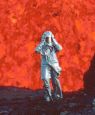
The force of nature comes to stunning, searing life thanks to the Kraffts' footage, whether it is rivers of magma or gouts of smoke, with the film gradually building the case that they knew exactly the impact of what they were committing to camera would be.
For such a studiously artificial work...it is profoundly moving.
The performances are all first class, with any one of the three leads capable of carrying a film on her own.
Inevitably, there is a slight air of the stage about this and an emotional gear change at the midway point doesn't quite feel fully earned but the actors so fully inhabit these roles that they carry you with them.
Diwan lets the cold hard facts trickle in as weeks are marked off at the bottom of the screen.
Despite its compelling elements, the filmmaking falls too far on the clunky side.
There’s a rare intimacy about it.
Ortega uses the power of suggestion to stoke the mood - the whispers of prayer, a sudden wind blowing up where it shouldn't, an unexpected voice at the end of the line.
An important film.
Gorbach presents war as an insidious and dangerous beast, prowling about the edges of people's lives, swiping at those who aren't directly involved just as easily as those who are.
Shows that escapist films can serve every bit as valid a purpose as anything else when it comes to uniting people.
The deliberate airlessness - which finds contrast in the likes of Miss Harris' joy at her first knickerbocker glory - works well initially, but as Nighy has less screen time and the film slips into considerations of the switch in Williams' life in the past tense, it drifts towards the stagey.
Walker-Silverman is in no hurry to reach that encounter and he makes slipping into the rhythms of Faye's day a thing of gentle joy.
Essentially an old fashioned tale in which the pursuit of dreams needs to be balanced by learning to appreciate what one has.
Southern and Lovelace stick to a fashionable, tastefully minimalist aesthetic, but they play it too safe – this is a film that deserves maximalist energy.
While it’s important to bring attention to the wider-spread government actions against the minority group, the film’s truly valuable observations are of how the prejudice impacts normal life.
McLeod teases out the tale as we see how much of this has exited the realm of fact and entered the realm of collective myth and storytelling in the years that have passed.
The lighting used by cinematographer Rina Yang is some of the best I can recall in an American independent film since Moonlight.
Set in a futuristic Rwanda, the themes are as old as the hills - with colonialism, identity and self-determination chief among them.
The setting has an immediacy, we've all been in one of these stations late at night, with its flickering lights and eerie stillness.
Finds a strong propulsive narrative with an emotional core.
Sikumi is certainly stark, and yet there is room even in this cold, austere backdrop for the warmth of the human spirit.
Tucker's performance ripples like a mirage, all charm on the surface but with an air of something much less cuddly
The directors also capture the day of the inoculations, which is likely to serve a secondary purpose to jab-hesitant viewers, since it shows people receiving the vaccine in minutes with no ill-effects.
Galán is extraordinary as the traumatised girl in a performance which requires a considerable amount of courage.
While Pettengill is fascinated by the archival content, she’s also not afraid to experiment with form, including digital distortions that identify the movie as a product of the present.
Danny Boyle directs with the right balance of tension and wit, never forgetting that violence begets violence as one thing leads to another.
Dunham is constantly looking for laughs and does deliver quite a few, but you never fully believe these people are living in the real world.
A fascinating watch.
Sister is packed full of character yet retains its melancholy edge throughout.
What matters here is not so much the phenomenon itself, but the way that the characters become obsessed with it.
Tafdrup chooses to follow the more familiar route, carrying events to a natural extreme, but in a way this lets the Danish couple off the hook.
A lesson in how to build atmosphere and wrong-foot an audience.
Meticulously detailed.
The message is clear - the world needs to pay much closer attention to what is happening in Brazil, before it's too late.
There is a lengthening here - but also a shortening of the emotional distance between us the viewer and those caught on camera.
Grisi has a background in photography and though the images are moving here, there's often a stillness to them and they are no less perfectly composed.
Through this lens, through this empowered performance, familiar material feels very different.
We quickly see the more poignant emotional landscape is every bit as important as that manufactured by pixels and bytes.
There is a lingering, half blossomed melancholy that lies underneath the often very funny, fast-paced moments of quotidian chaos.
Refined and illuminating.
It presents a radically different cinematic language, childlike, initially amoral, lyrical.
59th New York Film Festival early bird highlights Futura, Jane By Charlotte, James Baldwin: From Another Place and The Velvet Underground

Eye For Film continues to support festivals both locally and across the world. At the moment, we're covering:
Tallinn Black Nights Film Festival
Festival showcasing international and Baltic films
Thessaloniki International Film Festival
French Film Festival
The UK's longest running celebration of Francophone cinema

Search Movie Database
Search Eye For Film with Google