



 Facebook
 Reddit
A Woman's Face (En Kvinnas Ansikte), the 1938 Swedish film directed by Gustaf Molander and starring Ingrid Bergman, is based on Il Était Une Fois by Francis de Croisset. It isn't the first or last adaptations of his play. In 1933 there was Il Était Une Fois by Léonce Perret which stared Gaby Morlay, André Luguet, and Andrée Ducret. And in 1941 George Cukor directed A Woman's Face with Joan Crawford, Melvyn Douglas, and Conrad Veidt. The first was stagy in appearance and the American version was somewhat overblown with additional plot (Veidt's performance as Torsten Barring is in places quite subtle).
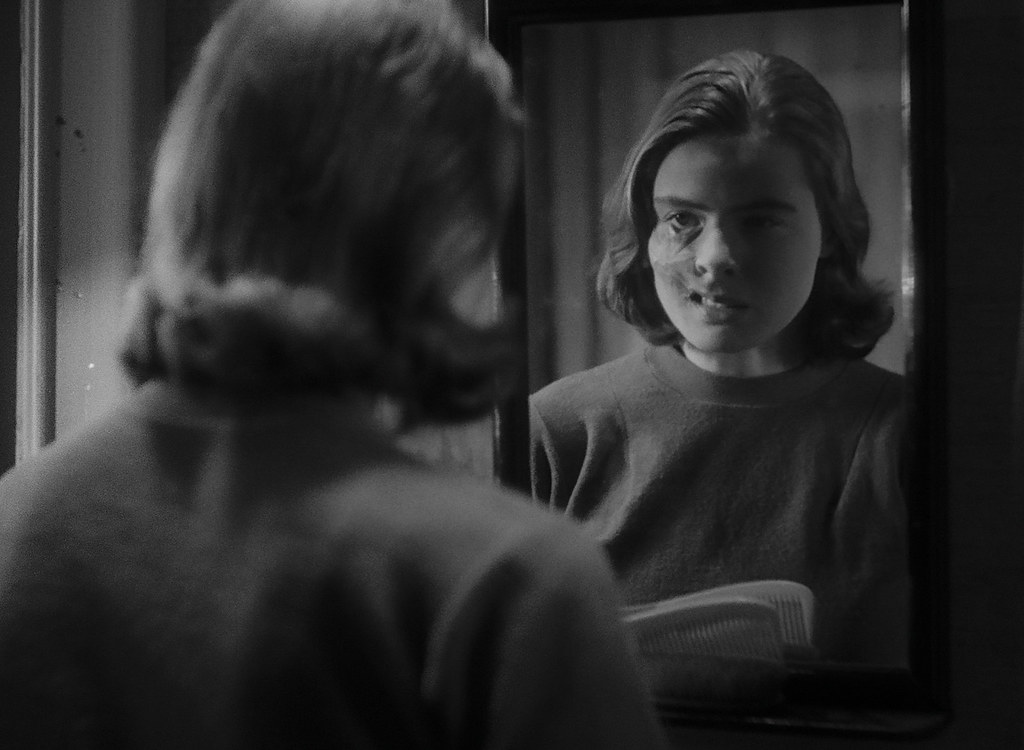
It was a brave move by Ingrid Bergman to be in a film like this. She plays Anna Holm, a loathsome villain with a face distorted by severe burns. As a star of the silver screen she would have been trading on her charm and looks.
 Holm's relationship with her face is a complex one. Orphaned and horrifically burned as a child, her disfigurement saves her being forced into prostitution, and some of the worst things that happen to children in care. The way she looks leaves her ostracised. The only place she can fit in is the criminal underworld. She can use her face as a tool to frighten and intimidate but doesn't want anyone to see it. Bergman's physical acting is impressive. Thuggish and skittish, she lurches like someone in constant pain.
Holm's life of crime involves masterminding a blackmail ring. One of her victims is Mrs Wegert (Karin Kavli) the adulterous wife of a plastic surgeon (Anders Henrickson). The wife pays Holm off with jewellery. The husband catches her with the jewellery but mistakes her for a burglar. Seeing her face, he takes pity on her and offers to help. The prosthetic makeup used on Bergman's face is very effective, looking like a real injury.
There is also a much darker scheme afoot. There is a plan to murder the young orphan Lars-Erik Barring (Göran Bernhard). Once he's dead, a relative, Torsten Barring (Georg Rydeberg), stands to inherit. Holm was to plant a criminal into the Barring household to serve as the boy's governess. This woman was to assist with the killing.
After her surgery Anna Holm renames herself Anna Paulsson, goes to Forsa and, unknown to her former gang, takes the job of governess. Lars-Erik is being cared for by his grandfather (Tore Svennberg) and the housekeeper Emma (Hilda Borgström). Things are a little rocky at first Anna finds herself identifying with the Lars-Erik and in doing so becomes a happier person. She also enjoys the attention of Harald Berg (Gunnar Sjöberg). The tranquillity that she experiences for the first time in her life doesn't last. Torsten Barring, recognising her old mannerisms, realises who she is.
A Woman's Face doesn't just ask the audience to think about the obvious questions about how good and evil are represented. By changing how Anna looks the film changes her moral compass and how we judge her. If society sees her as a monster, is that what she must become? Dr Wegert sees beyond the damage, the potential for redemption. The film is about the limits of that redemption. How can Anna fit back into a society that she has been damaging for so long? Is change and contrition enough when your previous actions are going to lead to someone's death?
Reviewed on: 25 Nov 2026
