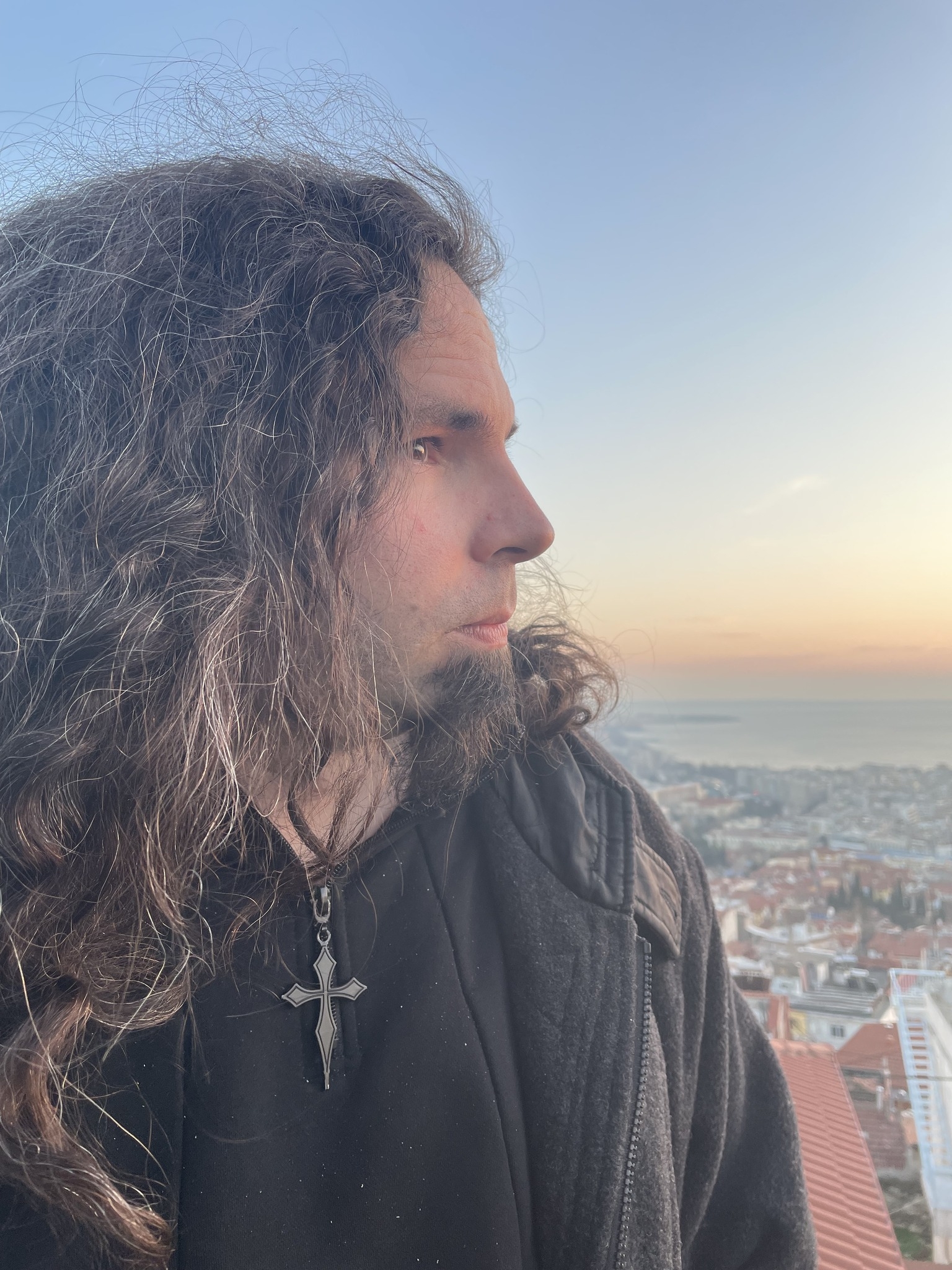
Marko Stojiljković is a professional film journalist and critic, as well as an occasional film festival programmer. Originally from Serbia, but based in Slovenia, he can be spotted at a number of film festivals, mainly in Central and Eastern Europe. He is a regular contributor to international publications Cineuropa, Asian Movie Pulse and the European Animation Journal, along with a handful of media in the region of former Yugoslavia. He is a member of the Croatian Film Critics Society and Slovenian and international branch of FIPRESCI.
Marko is a proponent of the theory that no movie is useless and, no matter how bad it is, it deserves a review, so it could serve as a bad example. For instance, to appreciate the heights of the elevated genre pieces, one has to see enough trash and schlock to have something to compare them to. He describes his approach as heavy metal film criticism, complete with blast beats, riffs, loud vocals and word “solos” arranged in a flexible, but clear structure – angry and loud, but articulate.
We have 67 reviews by Marko Stojiljkovic in the database:
read them
here.
A rational, emotionally distant female police detective investigates the disappearance of a girl in a region famous for black magic and pagan heritage. Her investigation gradually becomes a journey into a mythical world.
Eventually, The Lost Son ends up as a mixed bag that serves as a portfolio of Štante’s technical abilities as a director, but shortcomings as a writer.
A detective investigating a domestic abuse case who discovers that the perpetrator is his own brother, forcing him to confront the violence that shaped his childhood.
One could imagine a global, English-language remake of Hidden People that could almost write itself, largely thanks to the universal and bulletproof story.
Handcuffed and with no memory, two strangers build a raft to rescue their broken lives.
Feels Like Home avoids the usual traps of a thriller-chamber drama genre combination such as unnecessary repetitions that are the product of laying out the cards too soon.
A woman is kidnapped by a family who claim that she is their missing daughter. She must impersonate this other woman in order to survive while she tries to find a way out of her nightmare.
Goiginger once again proves that he is a keen student of human nature, behaviour, interactions with society and the eternal pursuit of living one’s life in one's own way.
A family of professional clowns is hit by tragedy.
Apart from setting the tone and maintaining it, the strongest point of Schleinzer’s filmmaking is casting and directing the actors' interactions between one another and the environment.
A woman disguises herself as a man in 17th Century Germany.