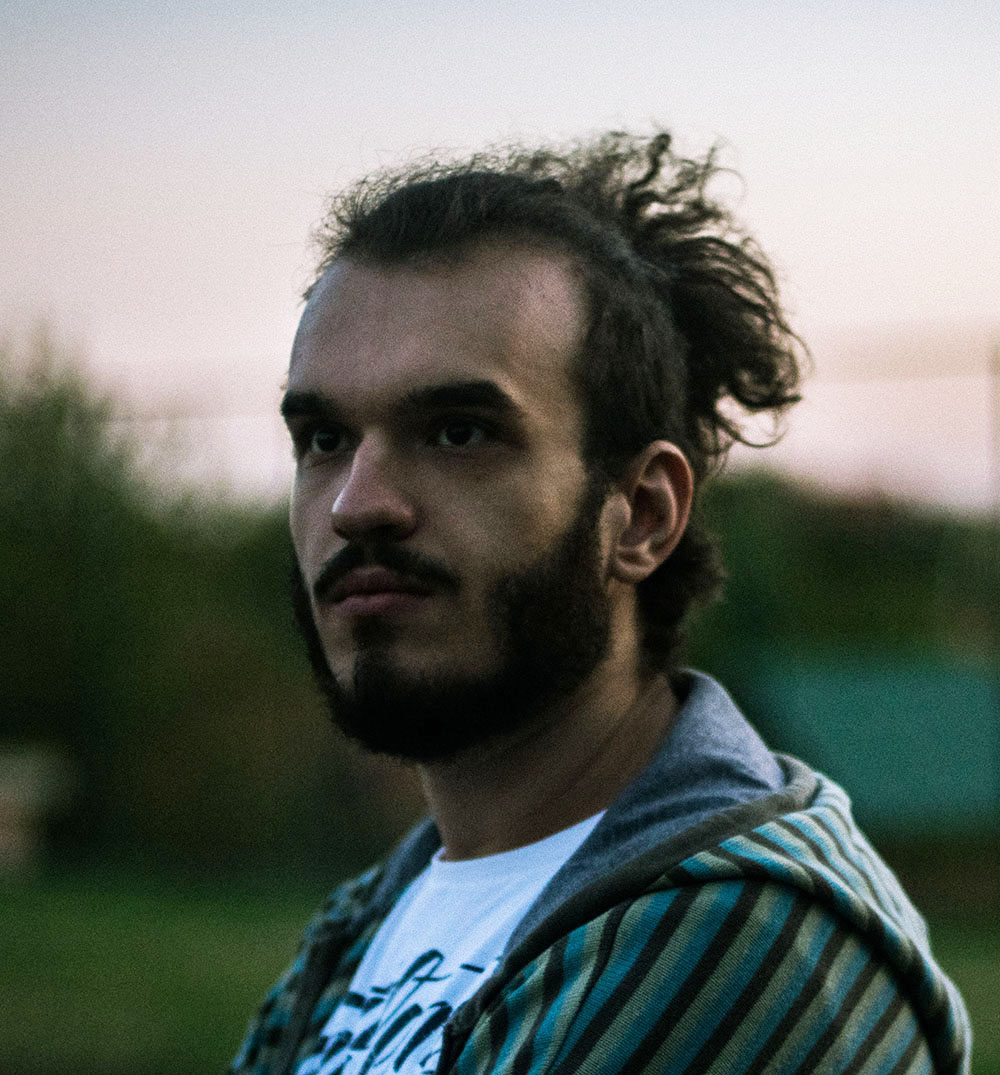
Nikola is a senior undergraduate in the Department of Philosophy and a film critic from Serbia. He is also one of the founders of the film studies discussion group at the Faculty of Philosophy in Novi Sad, which aims to examine the relation of film to different disciplines within the humanities, through interdisciplinary means of analysis. As a film critic, he has been a full-time contributor to web-magazine Autostoperski vodič koz fantastiku, and over the years has contributed to other web-portals such as Oblakoder and Kultiviši se. His philosophy papers on the subject of philosophy of media have been represented in different publications.
We have 29 reviews by Nikola Jovic in the database:
read them
here.
The jumps from scenes in the style of Romanian New Wave to stylised oneiric dream sequences are so sharp that the overall result feels jarring in a way that undermines both stylistic choices.
A retelling of the Cinderella story on the margins of modern day Serbia.
Aleñar Iglesias... presents the ordinary world as loaded with meaning.
During her Mallorca summer, Antonia recognises similarities with her late grandma. She develops an influence over her mourning grandpa through dress-up, blurring who inhabits who.
Its biggest problem is that its main protagonist and his love interest are never fleshed out and could basically be boiled down to all too known Hero With a Thousand Faces tropes
A young hero must harness the powers of the long forgotten Hammerhead and the Element in order to protect his loved ones.
He manages not only to reveal a thesis statement on his entire career, but also dive into the experimental territory like never before.
A typical middle-class family struggles with financial troubles in an ever-changing world, caught in a historical web of circumstances they’re unaware of.
Even though we’re essentially talking about a basic shot-reverse shot exchange, framed in creeping wide angles, juxtaposed with close-ups, the feeling is comparable to watching a getaway heist.
An online scammer, reselling faulty products at preposterously high rates, is on the run after some of his customers decide to hit back.
There is a feeling of being in a constant movement, with cars and buildings whizzing by as Souleymane is rushing through the city, either riding his bike, or running from one type of public transport to the next.
Two days in the life of a bike delivery guy who is trying to get asylum.
A lot of the time, we talk about forgetting as a form of letting go, but in Inadelso Cossa’s sophomore docu-fiction feature, forgetting is a haunting, undead, presence.
A filmmaker tries to revive his memories of the war raging in a Mozambique village through soundscape exploration and interviews with the villagers.