“It's various stories,” he says. “The arranged marriage, I've heard it. When they're children the [promise of] marriage is made. I've heard about that. I was in the last [generation] when it was dying out. I knew about that. And I heard a story about the wrong husband. It’s based on true story. I heard about this man living with this woman who already had two children when the right husband came and they had to battle. They fought together like in the film, and apparently the right husband won. These arrangements are made all in the head. A promise is a promise.
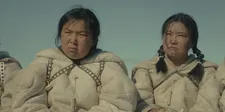
Theresia Kappianaq and Leah Panimera in Uiksaringitara Photo: Kingullit Productions
“I also heard, when I was a child, my mother telling us ‘Don't wander off too far or the troll will get you.’ Of course I've never seen the troll. There's few people that have seen the troll. So what does it look like? They described it as this monster with a big nose that lived in the sea. And there's actual legends about this troll that one once grabbed a hold of a kid, and the parents have been hunting for their child ever since. Then they found this child standing outside on the ice by the crack, with a rope around it. Every time the parents would come, the troll would pull it down into the sea. I blended these stories in Wrong Husband. That's how we got the film.”
I ask about the fog lady who also appears in the film.
“I created that spirit because most of my films are set in winter. I had this idea that I would have a blowing snow spirit. Every time when it's blowing, the face starts to come. But I've always made films in the winter and I wanted to make one in the summer. So I thought of this: why don't we have a fog lady? We know there's some spirits in the fog. I've heard stories about the wet fog that they go through, and there's spirits in there. What if it's a lady?
“So when we were writing this story, I wrote a story that we're going to have this fog lady. Why is she there? So I made the story about this troll that got her brother at the start. Ever since, she’s looked out for this troll. But these spirits, they have masters, the shamans, and in this story I felt they had two shamans. One good shaman, one bad shaman. And the shamans are just acting what they're doing. The bad shaman kills Nujatut’s husband and his nephew rolls in and takes the woman, and takes her [Kaujak] out of the camp, and she starts to marry another young man. This is storytelling, just like cowboys and Indians – when we used to watch movies, how the bad guys win in the first and they lose at the end.”
Another, more powerful entity also comes into play.
“The Inuit belief, before it was bulldozed by Christianity, they had stories of the moon, about the man in the moon that comes down and rescues orphans and wives who have been battered by their husbands. So in my film we try to tell a story about the battered women who just went somewhere, left off the ground. In the movie, once the mother tells a story about this man in the moon, and the girl is now praying, I had this idea. Since the good shaman, the woman shaman is on their side, I had this fog lady speak through her, through her ear, and out comes Kaujak saying ‘Dear husband, come and save me.’”
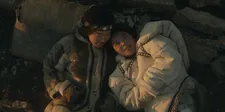
Haiden Angutimarik and Theresia Kappianaq in Uiksaringitara Photo: Kingullit Productions
We move on to talk about casting and the importance of being specific.
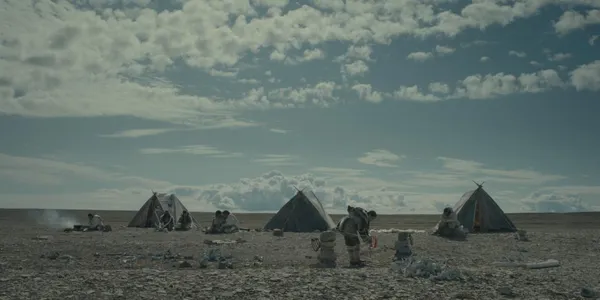
“Because we were after young actors we would cast in my community after school. They would come and cast in the Canadian Arctic. We are in this particular area where we have our dialect. Every area has different dialects. I don't want to mix. Each dialect has its own costume. I stick with my region and the way they make their clothes, the way they make their sleds, everything the way they make it.
“We were shooting our little island at the end of the island, and you quarantine the area because nobody's there. Only hunters pass through there, so you just quarantine that area. And sometimes we have a truck to get to our camp. We had a camp, our supplies, one camera, two shooting locations. That's how we did it.”
What does it mean to people to see these kinds of stories on film? What does it mean to the community?
“We've been doing it in my community because my community rejected TV back in ’75, and again in ’79, because there was nothing in our language,” he says. “We finally gave in in ’83, and then we went to where it looks like we're leading the filming industry, but the way we tell stories, I want other regions to do the same thing. I'm going to stick in my hunting area, the way we do things.”

 Facebook
 Reddit