Harald Swinkels on the colours, craft, history and lesson of Odessa
by Jennie Kermode
Odessa
“The story of Odessa actually started at a dinner table,” says director Harald Swinkels. “I was having dinner with some of my best friends. This was during the Syrian refugee crisis, and one of my most right wing conservative friends started arguing that ‘these people’, as he called them, should be taken in in their own region, certainly not by us. Then we had this kind of discussion if he would feel the same about these refugees if they looked like him and me, and that question stayed with me.
“I thought, well, I want to make a film about a fleeing family with a northwest European look. That premise almost immediately led me to the Second World War. But then shortly after, in the Netherlands, in my view, a dangerous Dutch politician won a landslide in the elections. People voted for this guy because he's funny and eloquent, but they didn't look further than that. In my view, they mistook charisma for character.
“Then I thought, well, I want to make this film out of a fleeing family, but then within 20 minutes, I would like to explore if I can let the audience fall into their own empathy trap and make them root for a monster. And so those two moments became Odessa.”
Odessa is a powerful film, among the most impressive in this year’s Oscar race. It’s a film whose full effect depends on you not realising what’s going on, but it’s impossible to discuss in any depth whilst maintaining secrecy, so there are spoilers in this interview. Even if you know what’s happening, however, you’ll be swept away by the performances, cinematography and directorial technique.
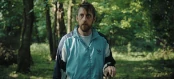
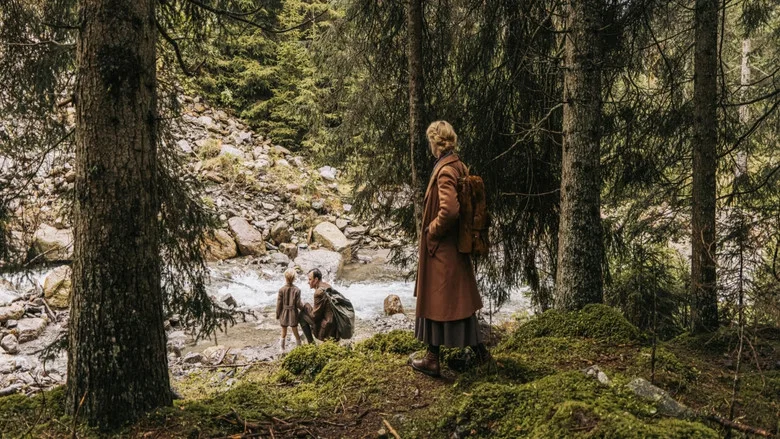
When we first see the characters – man, woman and boy – walking across the mountain, their clothes aren't that old fashioned and it seems like it could be a family hiking anytime in the 20th century, even now, just out on a holiday. It's only gradually that we realise that they're refugees. The word ‘Odessa’ is one of the first indicators that something strange is going on. It’s actually an acronym, Harald explains.
“It stands for Organisation Der Ehemaligen SS-Angehörigen, which is Organisation of Former SS Members, and it's this kind of mythical organisation because the Americans, and especially Simon Wiesenthal, the famous Nazi hunter, they thought it was an actual organisation. It was a word that was used by German prisoners of war, and so they thought it was this actual organisation helping Nazis to escape to America, that it was really a formal organisational structure or something like that was never proven. One of the things I like with the film is I like people to Google it, because then they can start to find out what's all behind this, the name of the film and why it's called that.”
The film is enhanced by its stunning setting in the ancient landscape of the Dolomites.
“I wanted it to be historically accurate,” Harald says. “So the historical figure, he actually fled over the Dolomites to Genoa and then onward to South America. But at the same time, for me, because the whole film is about duality, and the fine line between kindness and cruelty, so the Dolomites also made this perfect backdrop for the story, because also these mountains, they are beautiful in one moment and brutal and gruesome the second. They also incorporated this kind of duality and made the fleeing family even more fragile. The three peaks that are at the start and the ending of the film, it's like two bigger peaks and one smaller one. And I saw that as this kind of metaphor for the family. It's also that he realises by the end that these peaks are far more eternal than his family life will ever be.”
There's a moment in the mountains when they're walking down a steep slope and helps his son, and then he hesitates for a moment and then helps his wife as well. We see that caring side of him, but also there's a moment when we think: how much is he really noticing that his wife is there? His focus is on keeping his son with him. There's also a cruelty to taking a child through that environment, through that experience. Does the child need to have gone with him in the first place? I ask Harald if that something he was thinking about when constructing those scenes.
“Yes, yes, very much so, because we didn't shoot it chronologically. For Magdalena [Müller] we had a motivation scorecard, so that she could see in every scene where her level of motivation was at. Then Bastian [Beyer] had to see whether she was still motivated enough to go on. That's one of the things that were a very important part of the rehearsals, and also the fact that I didn't find anything about [the man to suggest] that he was also a good husband. He was a friend to children, but I didn't want him to be portrayed then as a loving husband, so there's this distance between them that we keep throughout the film.”
How did he take care of the boy, Tom Peper, whilst filming in such a challenging environment?
“He was only five years old when were shooting it. With a child of five years old, you don't want the child to act, because then you stop believing. During the casting we saw that as soon as he felt this kind of pressure, he became very silent and inward. That's the main reason that I cast him for the role, but it also meant that we could only get natural reactions from him. So what is a really important scene is the scene where his father builds him this submarine with bark. We wanted him to smile naturally when he first saw it, so it was one of the things that we rehearsed thoroughly without him.
“We kept the submarine from him so that we could get his natural reaction at the right moment, and that's what we did with several other moments in the film. What also made it very naturalistic is that the scene where they are at the door in this small hamlet. That was the last day of shooting, but in the script then Rolf is very tired. He was actually very tired, so he's rubbing his eyes, etc. which all made it very natural.
“We had a terrific child coach with us, Elisabeth Hesemans, and she was there for him throughout the shoot because in terms of the weather conditions, it was also quite brutal. The first day of shooting, we were putting on sunscreen factor 50+. Two and a half days later, we were shooting in a snowstorm. She kept him warm, happy and motivated, and he really liked the experience also being the only child in the whole place. Well, we made him a little prince from time to time, so he looks back at it with a lot of satisfaction.”
I tell him that I wondered about that scene in the Hamlet, which seemed quite scary for a child. A woman there refers to the family as die Spinnen - the spiders.
“Spiders was a name that I found out with my historical research that was also used for Odessa,” Harald says. “I thought it was a bit creepy, and a bit alienating also for people to start looking it up. So I wanted to use that. And that was the only scene that we actually allowed his father also to be on set so that he could see that there was this safe place very close by with his father. That worked like a charm.
“He was a bit afraid of the dogs as well. We felt sorry for him, but when he saw the scene himself, he thought it was very exciting as well. And then afterwards, he could run in the forest with his film mum and dad, and he liked that very much.”
We talk about the colours in the film.
“I wanted to have this kind of vintage look, like a film in the Forties and Fifties of last century,” he says. “That's why I decided to shoot it on celluloid, because then it comes out of the camera already with its own character. One of the things that annoys me a bit in contemporary films is that as soon as it takes place in history, all the colour is gone, and I didn't want to portray that era as such, because I also thought, well, I want these vibrant colours. And also we shot it in October in the Dolomites, and then the colours over there are at their most beautiful. But we didn't do a lot of colourisation in post production, we just emphasised the colours that were already on the footage. We just wanted to shoot it as it is over there.
“We had six consecutive days to shoot it, and that was a race against time, a race against the sun. Because shooting on celluloid also means that if the sun is gone, you cannot shoot anymore. But then we have this kind of luck that we have four seasons in six days. It was quite brutal when we had to cope with it, but when you see the film now, you cannot really understand that this has taken place in six days, because it has mist and rain, it has bright sunshine, snow. So it was a really cool experience. And I think it was also a good thing that we did it in these six consecutive days, because it felt like the duality was also in the shoot. It was really beautiful and great to do it, but also it was coping with all the elements and being tired, etc. But I think it only contributed to the quality of the film.”
Harald was a producer on past Oscar-contender short Beyond Silence, so this isn’t the first time he’s found himself in this position, but how does he feel about being there with this film?
“I'm absolutely thrilled,” he says. “Sometimes I still have to pinch my arm that we are already back in the race with our next film soon after Beyond Silence. And it's also because we entered the race with Beyond Silence relatively late. With Odessa, we could enter somewhat sooner. So we also have some lessons learned that we can plot on the campaign. But most of all, I'm so grateful that I can show the film to a lot more people because of entering the Oscar race again. Then the film gets a much bigger platform.
“I would like people not to see it as this kind of history lesson, but to see it something as something that has a lot of relevance today, because the key message of the film is that history has taught us that monsters don't come dressed as monsters, I think. Well, also, from a political point of view, that's happening all over the world. I'm really happy that the Oscar campaign makes it possible to give the film a much larger stage so that a lot of people can grasp this message.”
 Facebook
 Reddit