















News and features

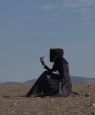
59th New York Film Festival early bird highlights Futura, Jane By Charlotte, James Baldwin: From Another Place and The Velvet Underground
2024
We get demonstrations of skill, from the weaving of a bracelet to the use of herbs to treat a wound, and these elements reinforce the idea that this is a real society which has developed organically over time.
It’s not a particularly sophisticated parable, but it doesn’t need to be. The central performances are strong and the bond between father and daughter feels real even when other elements do not.
Sakamoto manages to keep this light and charming even when people are bleeding, struggling to breathe or actually dying in the dirt.
High concept films like this can easily go awry, but Makoto Ueda’s script somehow manages to stay on the ball throughout.
Director Alec Bonk knows the language of tough guy action films perfectly, and star George Fearing has the physique to make it work.
Succeeds in creating and maintaining a chilly atmosphere of the sort rarely found in modern cinema.
It’s a film full of small acts of kindness, a film in which it’s possible to make mistakes and keep on going, and in which the audience is therefore at liberty to be entertained by a series of scrapes which might otherwise be mortifying.
The popular concept of genius is thoroughly subverted here.
This is an exercise in glamour in both its modern and archaic senses.
Though it plays around with science fiction and finds wry humour in reflecting elements of the procedural, this is ultimately a film about something more fundamental to human experience.
Thankfully the spectacular ending – all done with life size sets, which left Lang and his team no option but to pull it off in one take – remains intact.
Lang’s emotional distance allows the story to unfold without sensationalism or judgement, preserving its critical moments of ambiguity.
Austin Jennings builds up his story from little details whilst viewers are gripped by the tension between the three leads.
With its use of extreme close-ups and focus on odd details, its heavy investment in atmosphere and its absurdist asides, Encounters is a visually hypnotising film, engaged in its own experiments with shifting perspective.
A fascinating portrait of a cinematic era which will leave those who remain martial arts fans with a lot of titles to hunt down.
It’s a gem of a role for Raimi, who delivers the smooth talk and captures the high flying businessman look perfectly but shows us the human being behind them.
While Ann can handle a knife, there’s a sense that her look might just as easily strike others dead.
One of the most impressive horror films of the silent era.
The film utililses typical Japanese broad humour and a lot of innuendo, but for the most part it manages to keep up the pace and maintain an element of tension.
Sometimes the rumblings are of the Shaw Brothers, at others the Marx Brothers.
It’s inventive throughout, well worked out in terms of effects, and equipped with characters we can really get to know, with some great work even in the smallest roles.
Supporting its central idea with additional themes around identity, perception and mental illness, The Island Between Tides weaves a beguiling tale.
Unashamedly quirky but burtsting with the love of film, this is the sort of one-off doc that’s as much about the engaging playfulness of its construction as it is the content.
This would require serious work from any actor, and Barton-Grimley is not up to the task, with even his parental terror failing to convince.
Using very simple props, Obasi constructs a whole world in this small coastal location.
Cronin... perfectly captures the atmosphere of the little houses clustered around the moor, the distinctive quality of the light within them, the way that they feel like a small bastion of safety against the vastness of night.
This is quite simply the best performance of the year, blowing everything else out of the water.
An unashamedly odd little film which carves out a space of its own, Puddysticks has both intelligence and heart.
Yamaguchi and his regular writer, Makoto Ueda, have such a deep understanding of their characters that it’s the emotional timeline, rather than the physical one, that becomes the subject of real concern.
This playful approach is an effective one, making the film very watchable and enabling Mackay to direct viewers’ sympathies with ease.
It’s well handled throughout and effectively shows off Pierro’s talent for creating tension.
An unusually confident first film, stylishly shot in black and white, The Tenants may explore some familiar ideas but it is very much its own thing.
Where other such tales have become overly enmeshed in their own structural entanglements, Felker has the good sense to focus on character.
Almost every part of this slowburn road to not quite the middle of nowhere could be read either as a clue or a clever maguffin.
The line between horror and humour is at least as thin as that veil between the worlds, and crossing it can bring all sorts of things back. This is one of them.
Clavijo’s tightly wound performance keeps the story feeling taut and personal as its larger themes develop.
The film carries us from a carefree existence made possible by not paying attention, to a crushing tragedy.
Truly a milestone in British cinema.
Though the film naturally relies heavily on symbolism, and viewers won’t be surprised to learn that it began life as a play, the performances are fully committed and it has an appropriate degree of emotional heft.
59th New York Film Festival early bird highlights Futura, Jane By Charlotte, James Baldwin: From Another Place and The Velvet Underground

Eye For Film continues to support festivals both locally and across the world. At the moment, we're covering:
Tallinn Black Nights Film Festival
Festival showcasing international and Baltic films
Thessaloniki International Film Festival
French Film Festival
The UK's longest running celebration of Francophone cinema

Search Movie Database
Search Eye For Film with Google