













































News and features

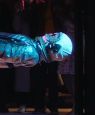
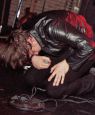
59th New York Film Festival early bird highlights Futura, Jane By Charlotte, James Baldwin: From Another Place and The Velvet Underground

2022
Martelli carefully crafts an air of almost casual dread.
Wells shows how interactions that were solid within their own moment become more ambiguous as time has gone by and the adult understanding of Sophie has grown.
Wright’s performance is among the very best of the year to date.
Simón takes a loose approach to the narrative, letting the small dramas of family play out alongside larger ones, giving as much value to the transient pleasures of fresh peach juice and cooked snails as the tensions between siblings.
Sen could easily just have made an observational documentary about the brothers' day-to-day work or simply focused on the kites themselves but he stretches its wings much further than that.
The intimacies are staggering.
Darín excels in this complicated role, revealing his character layer by layer, almost in passing, as the story of the atrocities unfolds.
Sofie Gråbøl is superb as the troubled Chana.
Banshees is lifted by good performances, particularly from Keoghan and Condon, whose major scene together has a delicacy of emotion that is sharply at odds with the brute force McDonagh more generally employs.
Iñárritu is very capable – one might even say brilliant – but has no idea how to restrain himself.
There's a poignant sense of poetry underlying some of her interactions, while at other times she simply conveys pure rawness of feeling.
Covert glances and dauntless gestures between the three protagonists, that keep us guessing about who knows what, weave a web as diaphanous as the stitching on fine cloth.
Everything about McEwen’s performance sings with stress, from the way she reacts to casual comments to the manner in which she lights increasing numbers of cigarettes.
Though we spend a good part of the film inside offices or private homes, there is also a lot of footage from the streets, where passions run high.
The balance of subjectivity and object status becomes important in a story whose protagonists are always potentially dangerous to one another.
Densely packed as this film is, only so much can be squeezed into an hour and 47 minutes. Menkes succeeds, however, in delivering a pretty thorough primer.
Lilya’s treatment while captive is only glimpsed in brief flashbacks, which avoid voyeurism and suddenly occur like glitches in the film, the image pixellating as though it is buffering, to reveal a scrap of memory.
Nagy and her screenwriters’ disciplined refusal to pursue grandiose storylines results in a well-earned sense of community.
By shining a light on the past, Lifshitz lights a beacon for people who feel outcast in today's world.
Loose camerawork from Frank van den Eeden enhances the intimate, raw spirit.
Vicky Krieps...is in excellent form and up to the task of presenting to us the icon in all her idiosyncrasies.
As with Boulifa’s first film, much here is built not upon what a specific character does but on another character’s reaction to that.
Park does it the hard way, building up a complex psychological and intellectual relationship in which sexual desire feels like an emergent characteristic rather than a starting point.
An impressively experimental piece of cinema, which retains the power to surprise its audience more than six decades after its initial release.
It’s Plaza’s magnetic performance which really makes it special.
With Roger Deakins handling the cinematography and making the most of the magical light found on parts of England’s south coast, the film never ceases to be visually absorbing.
It has a Wicker Man feel but without the flamboyant histrionics
The beast of burden’s travails seem to be a thinly veiled criticism of Polish society which erupts in one sequence into mindless violence.
Rian Johnson's knife is sharper and more precise the second time out.
To refer to something as ‘pure cinema’ is uninspired, but Godland is one of those rare films that has some untranslatable quality that speaks for itself.
Chastain is its saving grace.
What does it mean to be a real boy? Perhaps the answer doesn’t lie in flesh and bone.
A timely, moving, frequently beautiful multi-layered portrait.
This is less about the puzzle of who the murderer is... than about the way he slots into society and, after his arrest, is viewed by the public.
There’s a depth and groundedness here which speaks to lived experience.
One of the best things about cinema is that it encourages us to feel empathy for others, but in a case like this, one hopes that it will not contribute to gaslighting for people currently in vulnerable situations.
It is not so much individual people who cause the problems but rather the constricting cultural circumstances that dictate everyone must play their allocated role.
Gorbach presents war as an insidious and dangerous beast, prowling about the edges of people's lives, swiping at those who aren't directly involved just as easily as those who are.
By the time that West is ready to show his hand directly, most viewers will be so wrapped up in Linoleum that that details will scarcely matter.
Often tender, charming and moving
The deliberate airlessness - which finds contrast in the likes of Miss Harris' joy at her first knickerbocker glory - works well initially, but as Nighy has less screen time and the film slips into considerations of the switch in Williams' life in the past tense, it drifts towards the stagey.
While the choreography of all this is audacious, Hardiman is equally interested in dialogue. He loves an intricately worked sentence as much as a finely coiffed barnet.
Southern and Lovelace stick to a fashionable, tastefully minimalist aesthetic, but they play it too safe – this is a film that deserves maximalist energy.
Guzmán doesn’t need to hunt for symbolism as the protesters are often supplying their own.
The lighting used by cinematographer Rina Yang is some of the best I can recall in an American independent film since Moonlight.
There’s a real sense of fury behind this film.
If Kaadan doesn't quite get the dramatic weight to land solidly, she nevertheless has a fine eye for a poetic image.
The writing burns the skin off language.
At one point it seems “Panahi” could easily step from one country to the other, but as his film shows, leaving is not always an easy option.
Seydoux is superb as she runs the emotional gamut with subtlety and empathy, demonstrating an extraordinary survival spirit in complicated circumstances.
The languid mood contrasts with the most dangerous topics.
Tucker's performance ripples like a mirage, all charm on the surface but with an air of something much less cuddly
Martyrdom and bad wishing, casual cruelty and sweet despair reign in this realm.
Full of beautifully observed details, it’s as sensual as it is provocative, and makes room for its characters to unfurl naturally.
Resisting familiar narrative routes, Dionne Edwards’ film gets up close and personal with a family in a state of flux.
A black-and-white gem that truly deserves to be hailed as a 'lost classic'.
The director offers perhaps the best visual representation of the word ‘kitsch’ cinema has recently seen
Quietly devastating.
There’s some excellent material here, and if it doesn’t make you laugh all the way through, well, that’s probably because it isn’t intended to.
It lacks the energy and precision vital to any journalistic investigation, and especially to one taking place under this kind of pressure.
The film is less about ambition or striving for success, as it’s about the fetishisation of that image of success, and how striving for the perfect image can destroy you.
Transcendental is often a pretentious word, but Miyake’s cadenced, Ozu-reminiscent, directorial style has a talent for sensing tensions and charging shots with profound meaning and sereneness.
This is a film of boundaries and barriers and attempts to overcome them.
There are none of the big set piece speeches traditionally associated with winning awards. Instead we are presented with something which feels much more raw and natural.
While exploitation is expertly outlined, the directors are never exploitative themselves in the way it is depicted.
A roller-coaster of the effects of absolute power corrupting absolutely.
The stories that bloom here are rooted in the real, jacketed in the bruised flesh of familiar harms.
Grisi has a background in photography and though the images are moving here, there's often a stillness to them and they are no less perfectly composed.
A film that often lacks subtlety in its execution despite the performances and impressive make-up craft.
Baumbach shoots his disaster scenes, evacuations, and poisonous cloud rife with contradictions. The purple sky of doom is beautiful and strangely soothing.
Young star Paul Kircher puts in an impressively sensitive and emotionally raw peformance.
Polley has crammed in a lot of good ideas, but they cannot all usefully share the same space.
Pugh's performance, which dovetails nicely with newcomer Cassidy’s devout determination as Anna, can’t quite overcome the uneven plotting and, at times, flimsy characterisation.
Better in its subtler moments, when it explores not just the difference between what is being filmed and reality by the fictions the characters are also inventing for themselves, the film is made compelling by its own immaculate casting.
It presents a radically different cinematic language, childlike, initially amoral, lyrical.
59th New York Film Festival early bird highlights Futura, Jane By Charlotte, James Baldwin: From Another Place and The Velvet Underground

Eye For Film continues to support festivals both locally and across the world. At the moment, we're covering:
Tallinn Black Nights Film Festival
Festival showcasing international and Baltic films
Thessaloniki International Film Festival
French Film Festival
The UK's longest running celebration of Francophone cinema

Search Movie Database
Search Eye For Film with Google