Lu Po-Shun on coming at the themes of Will You Still Be My Friend from a child's perspective
by Amber Wilkinson
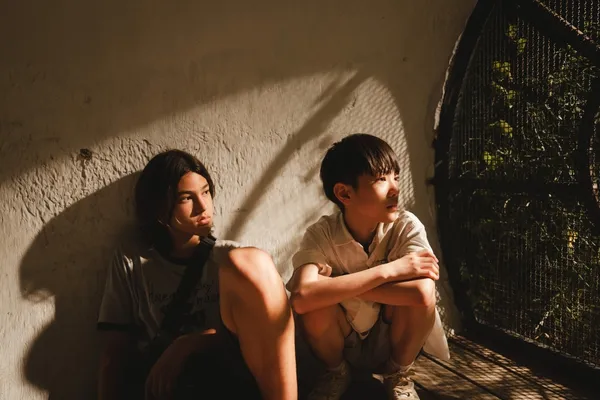
Jun (Aloysius Looi) and Jasper (Jayden Wang), who became friends in real life over the course of the shoot
Lu Po-Shun offers a children’s perspective on the machinations of the adult world in a Taiwanese village, where fishing ponds are being sold off for solar farms in Will You Still Be My Friend. His debut feature comes at the story via the viewpoint of teenagers Jun (Aloysius Looi), the grandson of the village chief (Lung Tien Hsiang), and his growing friendship with Jasper (Jayden Wang), the son of the Singaporean businessman who is buying up the land. The film has its premiere in the New Directors Competition at San Sebastian Film Festival, this week, where we caught up with him to talk about its themes and the challenges of working with children.
The director – who co-wrote the script with Elvens Chen – says the story is based on what has happened in his own hometown. He explains: “During Covid, the Taiwanese government encouraged green energy companies to invest in solar and wind power. So in these few years people come to the countryside to rent or to buy the land from the local fishermen and villagers to build green energy projects. The building is fast. You can finish it in three or four months, so the landscape is changing very fast so that is the worry. That’s why I wanted to make this film in the beginning. Of course, I always want to talk about the friendship story. For those two kids – they are only 12 or 13 – their friendship or emotion is very pure and innocent. The title is Can I Still Be Your Friend? But behind this title I want to ask why they can’t be friends.
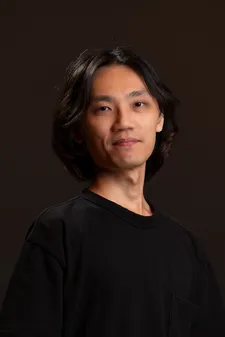
Lu Po-Shun
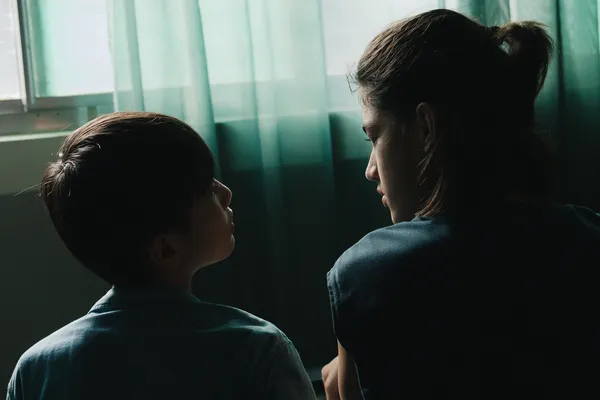
He says the adoption of the children’s perspective is so “you see how the story revolving around the two kids is so pure and innocent so you can use it as a mirror to reflect on your own heart”. The way that cinematographer Shyan Tan’s camera gets in among the young cast is impressive, as though it joins their gang, whether they’re sharing intimate secrets, performing lion dances or playing around.
Lu says preparation was key to achieving the naturalism. “The most important thing is that before we started, we had an acting class and our DP joined the class. I also joined the class. I think it is very important because a DP and his camera can be frightening for a kid. The key point is I let the DP and director and actors get to know each other before we started shooting.”
The kids also became friends on the set, with two months of coaching time. Wang is from Malaysia, while Looi is Taiwanese.
“They lived together as roommates, so they actually developed a friendship over the 30 days of shooting.”
There’s a tenderness to the friendship as the film develops LGBTQ+ themes and the filmmaker says they worked with the children on the characters, also discussing with their parents the importance of the message of the film that “you can’t discriminate against a person because of their sexuality”.
He adds that Taiwan is progressive in that regard, explaining: “I’d like to add that the Taiwanese government has been trying to have this kind of gender equality for about 30 to 40 years in school. So the kids are quite familiar with this kind of equality. So this is something that, in Taiwan, we’re pleased to say, we’re quite a bit ahead with.”
He says that was especially important because much of the cast of Will You Still Be My Friend are non-professionals. Another way of generating naturalism, was to cast children who already had the existing skills that he wanted his characters to display.
Lu Po-Shun: 'The story revolving around the two kids is so pure and innocent so you can use it as a mirror to reflect on your own heart'
In the case of Wang, who is from Kuala Lumpur, Lu came across him on Instagram, where his mother posts regular updates of him playing the piano. Looi, meanwhile, is a keen basketball player, who already has lion dance skills – where the children dress in costumes and perform.
“Rather than casting a role and have to teach the children those skills, I would rather cast boys who already has these abilities or talent, so that it matches the character’s point of view.”
Within the story, there are two sorts of privilege at play. There’s a sort of soft, community privilege wielded by the village chief – and, by extension, though he may not realise it, his grandson – while Jasper’s father has the privilege that money can bring to a situation.
Lu notes there’s also a cultural difference.
“When I started researching the film, [I realised] Singaporeans have a way of working that is step by step and following the rules. But in the case of Jun, in a Taiwanese village, his parents try to do things that are more reliant on relationships, they don’t have a protocol.
The sweet interrelationships within the film extend to that between Jasper and his grandparents, with his father somewhat on the sidelines. Lu says: “That’s actually quite common in Taiwan, especially in rural villages. Most of the grown men have to work in the cities so they have to leave their kids with their parents. So grandparents and grandchildren somehow have really special bond, sometimes even better than their father and mother who are not exactly 100% present in the kids’ lives.”
Asked about future projects, Lu says that after four years making this film, he’s ready for a break. In fact, he’s going fishing!
“I want to have a long holiday first. My father is a fisherman, so I want to join him.”

 Facebook
 Reddit