















News and features

59th New York Film Festival early bird highlights Futura, Jane By Charlotte, James Baldwin: From Another Place and The Velvet Underground

2015
To call the film haunting is an understatement.
If this weren’t a documentary, these five people would surely find themselves nestled in the pages of some postmodern epic.
Jude and Lazarescu also show how the structure of society has a habit of making you conform to it, whatever your intentions - a barbed idea intended to stick in the minds of those who live in today's Europe where the Roma still face wide-spread prejudice
Fresh, frisky and surprisingly chaste considering the amount of bed-hopping going on.
An intensely sad and affecting look at a hugely talented young woman, ill equipped for the all-consuming fame which her soulful voice would bring her.
Mixes observations on capitalism, society and storytelling.
Richard Gere is exceptional.
Malgorzata Szumowska takes a playful approach to the subjects of eating disorders and grief with suprisingly effective results.
The levels of twee are fairly high, and contrasted with the bizarre and often regressive gendered comedy it’s likely to divide audiences right down the middle.
Bridgend is a superb piece of work.
Larraín's judgement when it comes is fiercely Old Testament - harsh, unexpected and fast.
The simplicity of the location, with its gentle green hills and thin woodland, makes it feel as if it could be anywhere, yet Romero positions his camera so as to generate maximum tension from it.
A compelling and powerful character piece.
Bob may have the beefed up body of a bouncer but Hardy continually emphasises his softer, hesitant side, his body language screaming flight even though he is built to fight.
Structurally illustrates how the indigenous people don't see time as being a chronological straight line but as multiple realities existing simultaneously.
A difficult film, and a film about difficult women.
We see events from Alice's perspective, meaning that, unusually, she is positioned more as the desiring subject than the desired object within the narrative.
What is quite wonderful in all this flowing and "fade, fade, fade," fading is that the characters and their stories belong to no one specifically. They belong to a cinematic spirit world and maybe nobody even wanted them.
Severin Fiala and Veronika Franz’s film is one entirely about small details.
Fehu, in a careful balancing of tone, ensures that Pepa's situation remains tragicomic to the last, rather than merely exploiting him for cheap laughs.
Certainly there will be those who take offence - but that’s part of the objective in shaking up politically correct preconceptions.
A thriller, a deep hard stare into the nature of escape, a comedy of metaphors and an alluringly photographed glimpse into the abyss.
A thoughtful film which finds plenty of fresh dramatic potential in its subject.
This is the tail end of the good times, Doc and his cohort seem as though they are fading out.
In his customary style, Cousins makes a lot of points, not all of them hitting home.
Its refusal to treat fights as spectacle, together with its austere editing and static camera, provides a melancholic grounding.
From silence and small details, César Augusto Acevedo weaves a devastating tale.
Ethical acts are met with punishment and moments of kindness are just fleeting enough to make the next torque of tension feel all the more severe.
Amare's performance is a real gem.
None of the characters seem grounded in any kind of reality.
Her mix of animation, collage, and actual footage from the various periods covered suits her subject to perfection.
Stephane Brizé is a master of films that appear to say very little but actually speak volumes.
As a road movie it is surprisingly static
Full of dazzling images.
A bold study of what it means to be Chinese in the modern age.
The director and her co-writer Alice Winocour side with their young protagonists, drawing on their boundless energy to tell their story in the spirit of a fable and in a way that makes it accessible to younger audiences.
Documentary this may be, but it's very much in horror movie territory, and filmed as such.
Ageing, Paralluelo observes - for the elderly as everyone else - goes on, even when we fear it might not.
Deftly scripted, subtle and challenging, this is a film which reminds us why Muntean is such an important contributor to the Romanian New Wave.
Chabriel, in his first ever screen role, is a revelation.
Veteran actress Yun Jeong-hie, who came out of a 15-year retirement to take on the role of Mija brings a fragile beauty and strength to the part, lending her character an air of inscrutability that is intriguing rather than frustrating.
Hákonarson proves himself a master of his material - a sort of rural Ken Loach - shooting sparingly yet dramatically against extreme weather conditions.
It's worth noting that this is Altricher's graduation film - he's certainly got his career off to an impressive start.
Jackson Martin, Nick Serino and Reece Moffett have great chemistry and give wonderfully naturalistic performances, making them easy to engage with.
If this is romance, it's dead.
Maclean shows a land where loss of innocence is ever-present.
It is Kryštof Hadek who steals the show.
Péloquin delivers an absorbing drama about a ground-breaking period in a teenager’s life.
We are thrown headlong into a remake of Aliens, only with a mansion instead of a space colony and caterers instead of marines. The surprise is that it works.
Bispuri is interested in how escape from one form of repression seamlessly flows into another.
The passage of time - and a beautiful 4k restoration - have been kind to this reimagining of Jacques Offenbach's opera, with its deliberately operatic gestures and colours and stylised production design feeling sharply avant garde even today.
On balance, the dexterity of Garrone’s vision papers over the cracks and finds the poetic dimensions of the magical material.
This is a well structured and affecting piece of film-making.
Gere, despite his image both off and on screen, gives a flawless performance.
Like rap without rhythm, Tokyo Tribes is missing something vital: plot and characters.
This film is a shot of dayglo-coloured adrenaline to the vein, a vat of sugar poured into the eyes.
This film is not a hectoring polemic, rather a passionate plea for understanding and empathy.
A respectfully written and admirably performed drama.
It is the casting of Jónsson that is the film's master stroke. Known as a comedian in Iceland, he brings a great sense of underplayed comic timing to Fúsi, resulting in a big impact from small gestures.
As a first feature, this has conviction to burn.
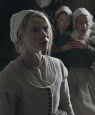
Eggers draws fully on the iconography of the period, the muted greys and greens of the landscape captured by cinematographer Jarin Blaschkee broken only by repeated flashes of cardinal red, bringing with it the suggestion of cardinal sin.
Labaki manages to get across a view of life that is not predominant in cinematic stories, without making it seem like an agenda.
Utterly lacking in decorum or shame, this is a film that reeks of self-indulgence but gets away with it completely.
The trappings and style more than make up for any lack of substance.
Its female-centered narrative hints at a new, rapidly crystallising modern identity which constitutes a conscious and eager shift away from old divisions.
59th New York Film Festival early bird highlights Futura, Jane By Charlotte, James Baldwin: From Another Place and The Velvet Underground

Eye For Film continues to support festivals both locally and across the world. At the moment, we're covering:
Tallinn Black Nights Film Festival
Festival showcasing international and Baltic films
Thessaloniki International Film Festival
French Film Festival
The UK's longest running celebration of Francophone cinema
Search Movie Database
Search Eye For Film with Google